
The fact that illegal, potentially hazardous eco-plugs remain widely accessible on countless online platforms is deeply alarming. Simply removing listings of recalled products falls far short of ensuring consumer safety. Even more troubling, half of the electricity-saving boxes we recently tested bore the identical model number (SD008) as two units recalled by the Office for Product Safety and Standards in 2022—both flagged for presenting a serious fire or electric shock risk. These findings add to a persistent pattern of investigations exposing how online marketplaces’ safeguards against unsafe, illegal merchandise remain shockingly inadequate.
Buying through the official website grants you a 60-day money-back guarantee, effectively offering a low-risk trial experience. Submit your complaint to the FTC’s official portal to help other shoppers steer clear of identical risks. The device may yield modest savings, especially in households with numerous electronics left in standby mode. Additionally, BBB assigns ratings based on metrics like customer service responsiveness, complaint resolution, and overall business integrity.
Some buyers also encounter unexpected or repeated charges for multiple units. The countdown timer rarely correlates with actual inventory levels. After clicking, many campaigns redirect you to a page mimicking a news article or investigative report. Before trusting the claims, there’s one critical check you should perform first—it explains why so many consumers end up frustrated.
StopWatt can be particularly useful in older homes with potentially unstable electrical systems, enhancing efficiency and minimizing energy waste. StopWatt devices are engineered for durability, promising reliable energy savings over extended periods. With fireproof casing and safety-focused design, StopWatt ensures secure and dependable energy efficiency.
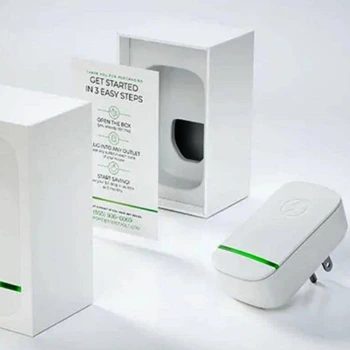
The identical device floods cheap online marketplaces, repackaged under different brand names. This is why many online users suspect StopWatt is merely a rebranded version of the same outdated product. Nearly identical devices appear on wholesale platforms under names like “electricity-saving box.” Same design, same glowing green indicator light, same unverified claims.
Marketing buzzwords like “optimizing power usage” and “cleaning dirty electricity” sound technical enough to sway non-electricians. This misleads consumers into wasting time and money on false electrical savings instead of proven solutions. Avoid daisy-chaining adapters or power strips if the manufacturer explicitly discourages it—overloading increases fire hazards. Savings vary based on standby devices, usage habits, and how effectively the device controls power draw without disrupting active devices.
Consequently, reducing reactive power won’t drastically cut energy bills unless the household has high inductive loads—a rarity in most homes. Many homeowners remain unaware of poor power power saving device quality, an oversight that can prove costly. Another frequently overlooked but impactful issue is dirty electricity—electrical noise or high-frequency voltage spikes in home wiring. The device’s marketing uses terms like power factor correction and dirty electricity filtering, which sound technical but don’t apply meaningfully to typical homes.
48 of 343 results for “stop watt energy saver”

Our lab found no evidence that any of the devices could help you reduce your electricity bill in any way. The device was also available on Shein, a China-based marketplace that harbours hopes of floating on the London Stock Exchange, and has a similar business model to Temu. The government’s Product Regulation and Metrology Bill presents a once-in-a-generation opportunity to protect online shoppers, and give online marketplaces clear legal responsibilities to keep dangerous products off their sites. Official government recalls for four similar devices on AliExpress, eBay and Wish in 2022 cited a ‘serious risk of fire and electric shock’.
Such language also implies hidden problems consumers didn’t know existed, creating a sense of vulnerability and curiosity. Many StopWatt-style pages discuss “dirty electricity,” “harmonics,” and “unstable current” at length. That’s the actual energy your appliances consume over time. This article dissects StopWatt’s mechanics, its marketing funnel, the typical contents of these devices, why the promised savings are exaggerated, and what to do if you’ve already purchased one. A countdown clock begins the instant you arrive on the page. All responded by removing the listings we flagged, based on the products we identified.
Utility companies charge residential customers by kilowatt-hour (kWh) consumed, not by power factor alone. For home use, however, power factor correction rarely delivers meaningful benefits. StopWatt’s core selling point revolves around power factor correction. These claims are strategically framed to appeal to cost-conscious, eco-aware consumers.
Skepticism persists over StopWatt’s effectiveness, with critics dismissing it as a gimmick or outright scam. Still, the term “dirty electricity filter” remains popular among consumers seeking eco-friendly smart home solutions. Dirty electricity—a form of electrical pollution caused by electromagnetic interference (EMI) spikes—remains a contentious topic. StopWatt’s most practical value may lie in surge protection and voltage stabilization. While power factor correction is scientifically valid, its residential implementation via plug-in devices like StopWatt remains widely debated.
Purchase options and add-ons

BBB also offers a platform for consumers to lodge complaints about product or company issues. They deliver impartial, trustworthy insights into a product’s performance, quality, and value. Here, I’ll share my findings on StopWatt based on these credible sources. Many buyers find that shipping speeds and packaging contradict the “local” or “fast US delivery” promises made on marketing pages.
Article Tags
This so-called “miracle” device is often the same generic Chinese-made “electricity-saving box” sold wholesale for $1–$2, then rebranded and resold for $49 or more. The casing frequently looks identical, the green LED strip is standard, and the marketing copy is often lifted from the same template. A common tactic is the Elon Musk angle, where the page suggests a connection to a famous inventor or groundbreaking technology.
Practical Guidance for Buyers

Countdown timers, “limited stock” warnings, and dramatic sales videos are common scam marketing tricks. Large factories sometimes use industrial power factor correction systems, but that’s completely different from a cheap plastic device plugged into a living room wall socket. The idea behind “dirty electricity” is that homes supposedly waste large amounts of power because of unstable electrical flow. Legitimate companies don’t need fake TV endorsements to convince people to buy their products.